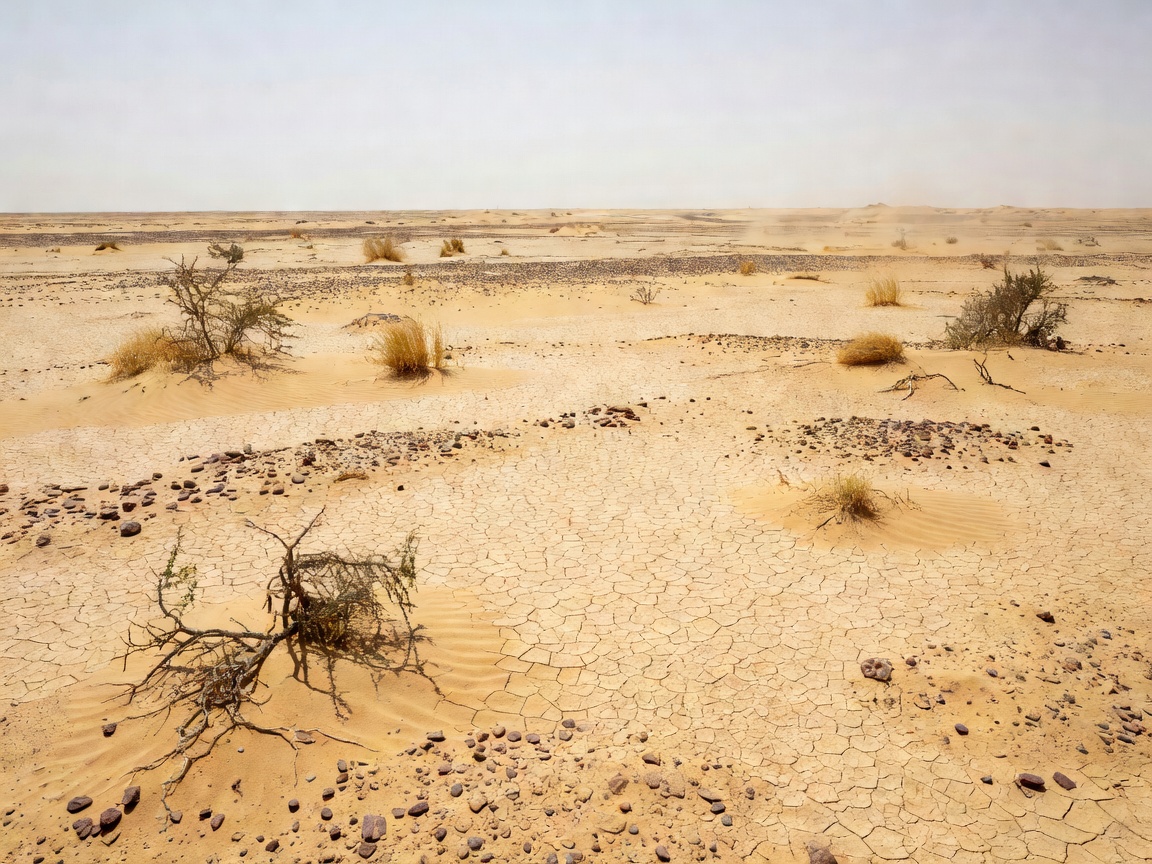
In an international system where states fight bitter wars over mere square inches of soil, Bir Tawil stands alone as an 800-square-mile (2,060 km²) trapezoid of habitable dry land that is actively and explicitly rejected by both neighboring sovereign governments.
The Tale of Two British Maps: 1899 vs. 1902
The bizarre paradox stems from conflicting British colonial administrative decrees. In 1899, the Anglo-Egyptian Condominium Agreement defined the border between Egypt and Sudan as a straight mathematical line along the 22nd parallel north. Under this straight 1899 line, Bir Tawil fell inside Sudan, and the fertile, oil-rich coastal Halaib Triangle fell inside Egypt.
Three years later, in 1902, the British established an alternative "administrative boundary" reflecting actual nomadic tribal grazing patterns. Under the 1902 line, the Ababda tribe’s grazing lands in Bir Tawil were handed to Egyptian administration, while the vast, 20,580 km² Halaib Triangle on the Red Sea was placed under Sudanese administration.
The Geopolitical Catch-22
Egypt claims the straight 1899 border (securing the valuable Halaib Triangle and renouncing Bir Tawil). Sudan claims the irregular 1902 boundary (securing the Halaib Triangle and renouncing Bir Tawil). Therefore, if either country were to claim Bir Tawil, it would mathematically forfeit its legal claim to the tenfold larger and vastly wealthier coastal Halaib region.
Micronation Aspirations and International Law
Because Bir Tawil is terra nullius (land belonging to no state), it has attracted dozens of internet eccentrics and tourists attempting to plant homemade flags to declare sovereign kingdoms. In 2014, an American farmer from Virginia traveled to the desert to plant a flag and crown his young daughter "Princess of the Kingdom of North Sudan."
Under established customary international law, however, an individual cannot simply create a recognized state by discovery or flag planting without actual effective occupation, governance, and diplomatic recognition by other member states of the United Nations. As a result, Bir Tawil remains completely stateless.